Types of Lawyers: 8 Legal Careers a High Schooler Can Explore
Future Lawyers Team·Published November 24, 2026
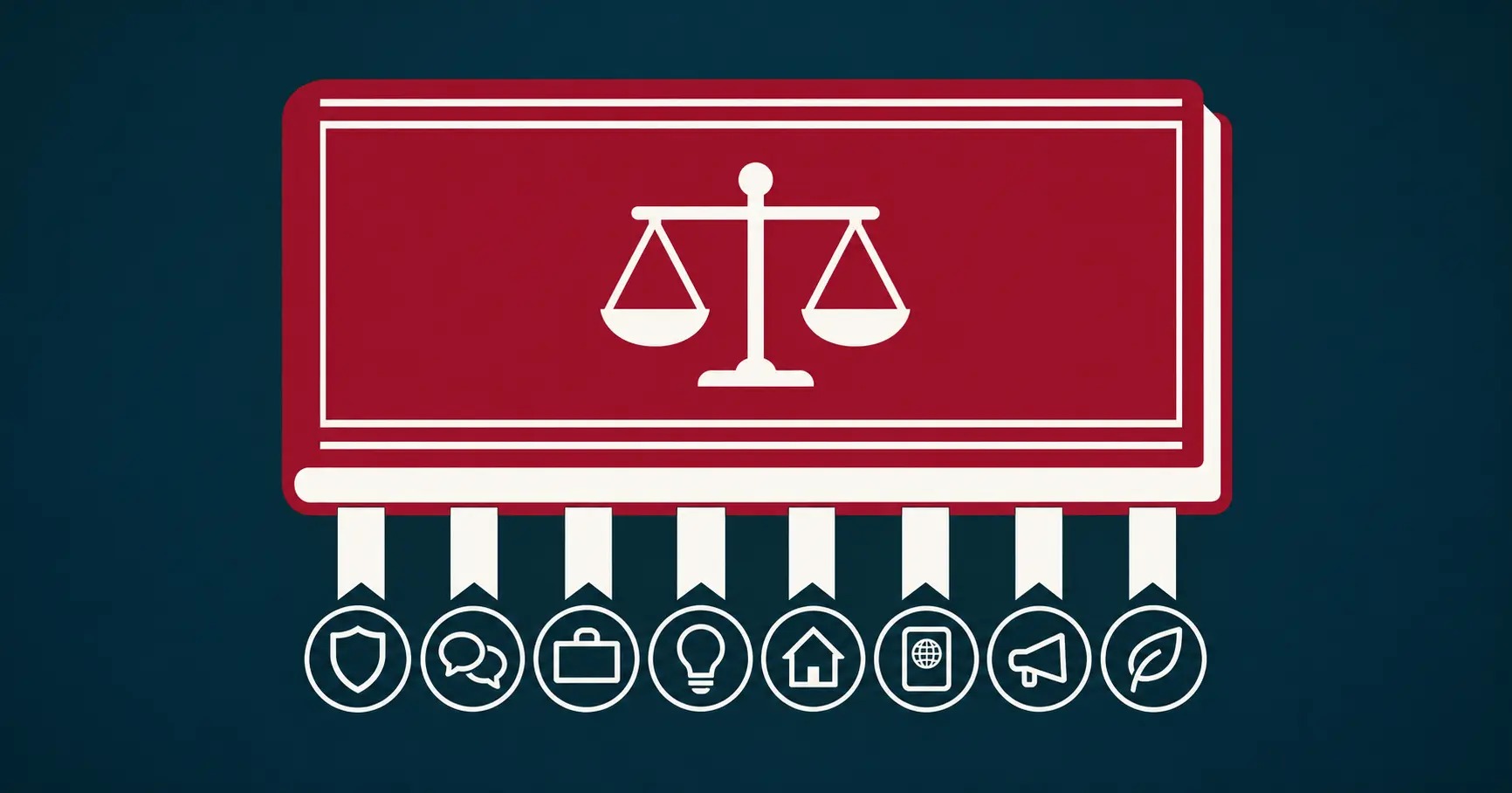
Lawyers work in many areas of law, including criminal, civil litigation, corporate, intellectual property, family, immigration, civil rights and environmental law. You don't need to choose one yet. High schoolers can learn what each area involves and try the skills they share, such as argument, writing and research.
The short version
- Lawyers can be sorted by who their client is and by whether they mostly argue or mostly advise.
- Eight common areas are criminal, civil litigation, corporate, intellectual property, family, immigration, civil rights and environmental law.
- Every area uses the same core skills: argument, writing and research.
- You don't need to pick an area in high school. Try the skills and notice what you enjoy.
Two Simple Ways to Think About Types of Lawyers
There are dozens of job titles in law, and the list can feel endless. Two simple questions make it easier to sort.
First, who is the client? Some lawyers represent a person, like someone accused of a crime or a parent in a custody case. Others represent a company. Some work for the government, and some work for a cause, such as clean water or equal treatment.
Second, what does the work mostly look like? Some lawyers spend a lot of their time arguing disputes, in court or across a negotiating table. Others mostly advise clients and draft documents, like contracts or company rules, so that disputes don't happen in the first place.
One note before we start: the descriptions below are general and US-oriented, areas of law overlap a lot, and job titles and legal systems differ by country.
Example:
Priya, a tenth grader, imagines three lawyers. One defends a teenager in court, one writes contracts for a bike company, and one works at a nonprofit on clean air rules. Using the two questions, she sorts them: a person and arguing, a company and advising, a cause and a mix of both.
8 Types of Lawyers and What They Do
The first three areas are covered in depth elsewhere on our blog, so we'll keep them short. The other five get more room.
1. Criminal law (prosecutors and defense lawyers)
What they do: Prosecutors bring cases on behalf of the government against people accused of crimes. Defense lawyers represent the accused and make sure their rights are protected.
Skills it uses: Quick thinking, questioning witnesses, persuasive speaking.
Try it now: Join a mock trial team and take a turn on each side of a case.
For a closer look at a working day, see three real schedules.
2. Civil litigation (disputes between people or companies)
What they do: Civil litigators handle disputes that aren't crimes, like a broken contract or an injury claim. Much of the work is gathering evidence and negotiating, and many cases settle (end in an agreement) before trial.
Skills it uses: Research, careful reading, negotiation.
Try it now: Read both sides of a small claims case summary and write which argument is stronger.
For a closer look at a working day, see three real schedules.
3. Corporate and business law (contracts, deals, advising companies)
What they do: Corporate lawyers advise companies, draft contracts and work on deals, such as one company buying another. Most of their work happens at a desk, not in court.
Skills it uses: Precise writing, attention to detail, planning ahead.
Try it now: Write a one-page agreement for a school club, covering who does what and what happens if someone quits.
For a closer look at a working day, see three real schedules.
4. Intellectual property law (patents, trademarks, copyright)
What they do: Intellectual property, or IP, means creations of the mind, like inventions, brand names, songs and software. IP lawyers help people protect these through patents (rights over inventions), trademarks (rights over brand names and logos) and copyright (rights over creative work). They also handle disputes when someone uses another person's work without permission.
Skills it uses: Clear explanation, comparison, interest in science, art or technology.
Try it now: Look up the copyright rules on a photo site and explain in your own words what you're allowed to do with an image.
Example:
A student band records a song and later hears a local ad with a very similar tune. An IP lawyer would compare the two pieces, check who created what first, and advise whether there's a real claim.
5. Family law (divorce, custody, adoption)
What they do: Family lawyers help people with legal questions inside families, like divorce, custody (who a child lives with and who makes decisions for them) and adoption. The work often involves mediation, where a neutral person helps both sides reach an agreement. It can be emotional, so listening matters as much as knowing the law.
Skills it uses: Listening, calm communication, problem solving.
Try it now: Try a peer mediation program at school, or practice helping two friends settle a disagreement fairly.
Example:
Two parents can't agree on a holiday schedule for their child. A family lawyer helps one parent put together a plan that works around school and travel, then negotiates with the other parent's lawyer so a judge doesn't have to decide.
6. Immigration law (visas, residency, asylum, in general terms)
What they do: Immigration lawyers help people move to, stay in or work in a country. That can mean applying for a visa (permission to enter for a set purpose), seeking residency (the right to live there long term) or asking for asylum (protection for people who fear harm in their home country). The work involves a lot of forms, deadlines and careful evidence.
Skills it uses: Organization, careful reading of rules, empathy, sometimes a second language.
Try it now: Read your government's public page on student visas and turn it into a simple step-by-step checklist.
Example:
A family wants their grandmother to visit for a graduation. An immigration lawyer would explain which visa fits, list the documents she needs, and check the application before it's sent.
7. Civil rights and public interest law (advocacy for individuals and groups, often at nonprofits)
What they do: Civil rights lawyers work to protect people's basic rights, like fair treatment at school, at work or by the government. Public interest lawyers often work at nonprofits, representing people who couldn't otherwise afford a lawyer or pushing for changes to laws and policies.
Skills it uses: Persuasive writing, research, public speaking.
Try it now: Pick a school rule you think is unfair and write a respectful one-page argument for changing it.
Example:
A student who uses a wheelchair can't reach the science lab because the elevator is always broken. A public interest lawyer would look at the access rules that apply and write to the school asking for a fix.
8. Environmental law (rules about land, water, air and natural resources)
What they do: Environmental lawyers work with the rules that protect land, water, air and natural resources. Some advise companies on following those rules, some work for the government enforcing them, and some represent community groups.
Skills it uses: Research, reading technical reports, explaining science in plain words.
Try it now: Attend or watch a local council meeting about a park or building project and summarize each side.
Courtroom Work vs Advising Work
Some lawyers spend much of their time arguing, in court or in negotiations. Others mostly advise clients and draft documents. Many do both, depending on the week.
If you like thinking on your feet, try mock trial, where students act out a trial with witnesses and evidence, or moot court, where students argue a legal question in front of judges. If you prefer quiet focus, writing tasks will tell you more.
Example:
A bakery says a supplier delivered spoiled flour and refuses to pay. A litigator would gather the delivery records and prepare to argue the bakery's case. A corporate lawyer would read the contract, see what it says about bad deliveries, and rewrite it so the problem is clearer next time.
Newer Areas of Law
Technology keeps raising new legal questions, such as who is responsible when an AI tool makes a mistake, or who owns something an AI helped create. Courts and lawmakers are still working through many of them. Our guide to AI and the law for high school students walks through the basics.
How to Explore Legal Careers as a High Schooler
Each of these activities lets you practice a skill that lawyers in many areas use:
- Mock trial: arguing a case with witnesses and evidence.
- Moot court: arguing a legal question in front of judges.
- Writing a case brief: research and writing. Here's how to write a legal case brief.
- Legal writing: clear, organized arguments on paper. See legal writing classes for high school students.
- Reading a plain-language summary of a real court case: learning how judges reason.
- Talking to a lawyer through a school or family contact: hearing what the work is really like.
For the longer path, read how to become a lawyer. Parents may find is my teen ready for a pre-law program useful too.
Example:
Marcus, a ninth grader, tries one skill a month: a case brief in October, a mock trial practice in November and a peer mediation session in December. He keeps a short note after each one. By winter break he knows he enjoys writing more than speaking, which is useful to know.
You Don't Have to Pick Yet
No one expects a high schooler to choose an area of law. Law students usually choose later, after classes, internships and clinics show them what they like. For now, curiosity and practice are enough.
If you'd like a structured way to try several skills at once, the Future Lawyers Fellowship runs live on Zoom over 3 weekends for grades 8 to 12, with Harvard student mentors. You can also compare options in our guide to the best pre-law summer programs for high school students.
FAQ
What are the main types of lawyers?
Which types of lawyers go to court?
Do I have to choose a type of law before law school?
Can I try different types of law in high school?
Do lawyers always work in courtrooms?
Curious which area of law fits you?
Start with a free live masterclass and see how it feels to work through a real legal question.
Next Fellowship cohort: 6 March 2027 · Early Bird $499 USD · Regular $699 USD per student